
Tourism Insights
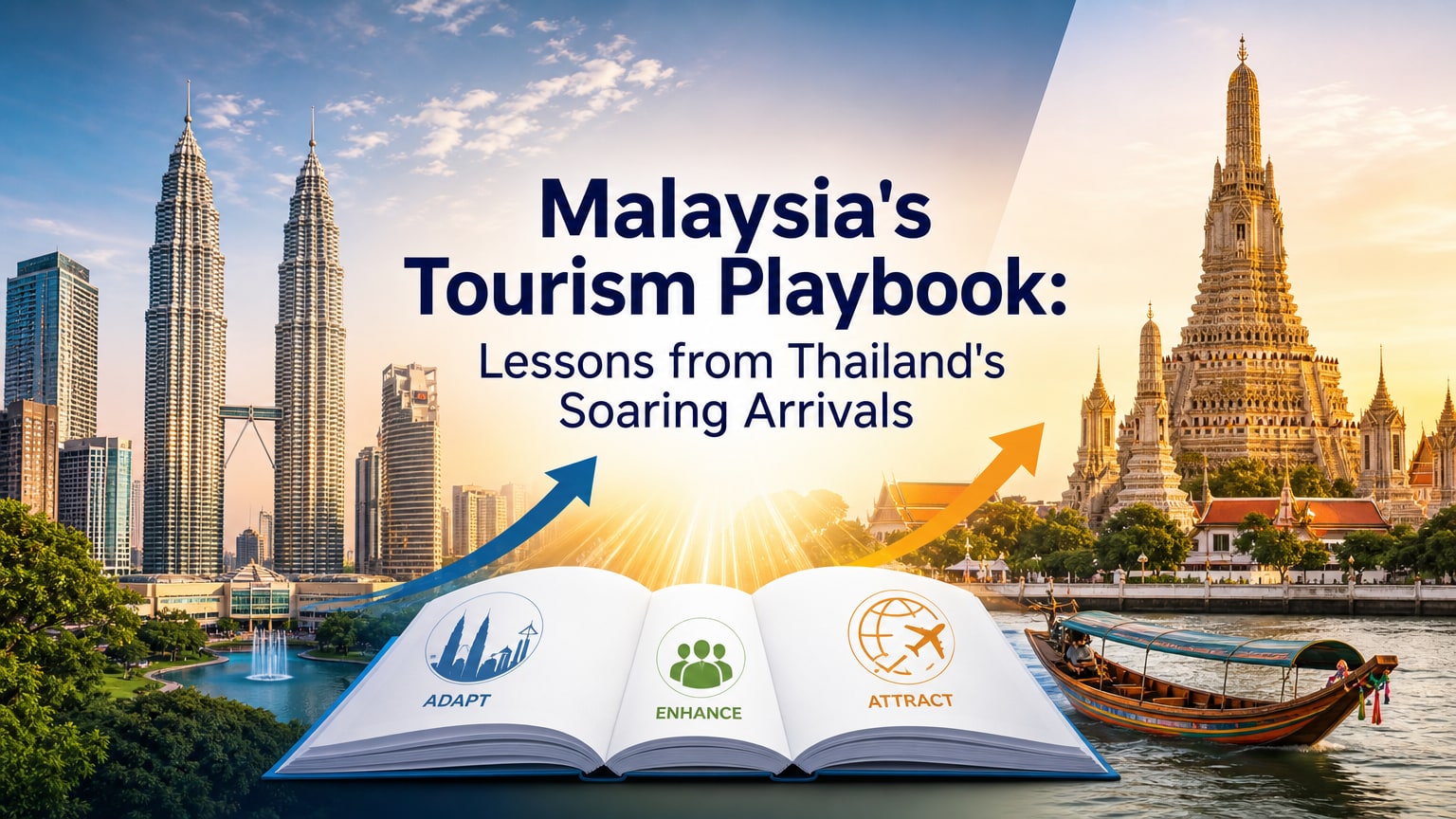
Malaysia's Tourism Playbook: Lessons from Thailand's Soaring Arrivals
Thailand's recent surge in foreign tourist arrivals offers valuable insights for Malaysian tourism players. By analyzing their strategies, Malaysia can adapt and enhance its own appeal to international visitors.
Thailand has long been a powerhouse in Southeast Asian tourism, and recent reports indicate its magnetic pull is only strengthening.
According to data from September 13-19, 2026, Thailand welcomed an impressive 464,200 foreign tourists, marking a 5.72% week-on-week increase. This translates to an average of 66,314 daily visitors, a significant boost of over 25,000 from the previous week.
For Malaysian tourism players looking to elevate their own industry, this success story provides a rich tapestry of lessons.
Understanding Thailand's Tourist Demographics
A closer look at Thailand's inbound figures reveals some fascinating trends.
The majority of their visitors, 324,816 to be exact, fall into the short-haul category, showing an 8.59% increase week-on-week.
Long-haul arrivals, while fewer at 139,384, saw a slight dip of 0.41%. This highlights the importance of regional markets for immediate growth and sustained visitor numbers.
Top Source Markets and Their Growth
The report identifies the top five source markets for Thailand during this period:
Malaysia: Leading the pack with 69,255 tourists, boasting a remarkable 29.12% weekly increase.
China: A strong second with 66,151 tourists, showing a modest 1.18% rise.
India: Contributing 34,432 tourists, though experiencing a 13.61% decrease.
Japan: A significant jump of 55.36% with 30,494 visitors.
Russia: Rounding out the top five with 19,531 tourists, up by 7.59%.
What's particularly striking is that Malaysia itself is Thailand's top source market, demonstrating a strong cross-border travel dynamic within the region.
This presents an immediate opportunity for Malaysian tourism to reciprocate and attract more Thai visitors, while also learning from Thailand's appeal to its own citizens.
Key Takeaways for Malaysian Tourism Players
Based on Thailand's performance, several strategic points emerge that Malaysian tourism players can adapt and implement.
1. Prioritize and Nurture Short-Haul Markets
Thailand's success is significantly driven by its short-haul visitors. This underscores the importance for Malaysia to intensify its focus on neighboring countries.
Given that Malaysia is Thailand's number one source market, there's a clear indication that travel between these two nations is robust.
Malaysian tourism bodies should:
Invest in targeted marketing campaigns in Indonesia, Singapore, Brunei, and naturally, Thailand.
Develop attractive packages and experiences that cater specifically to the preferences of regional travelers, often characterized by shorter stays and frequent visits.
Enhance cross-border connectivity, whether through improved land routes, more frequent flights, or streamlined immigration processes.
2. Capitalize on Strong Growth Markets: Japan and Russia
While China and India are traditionally large markets, the exponential growth from Japan (55.36%) and healthy increase from Russia (7.59%) for Thailand signals emerging opportunities. Malaysian tourism players should investigate what makes Thailand so appealing to these demographics and consider:
Tailoring unique experiences that resonate with Japanese cultural interests, such as nature, wellness, and specific culinary offerings.
Developing bespoke itineraries and promotional efforts for Russian tourists, perhaps focusing on beach destinations, adventure tourism, or cultural immersion.
Establishing direct flight routes or increasing frequency from these key cities.
3. Diversify Marketing Strategies Beyond Traditional Giants
Although China remains a critical market, its relatively modest weekly growth for Thailand (1.18%) compared to others suggests that over-reliance on a single market can be risky. India, despite its large population, saw a decline in arrivals to Thailand in this period. This indicates the need for Malaysia to:
Maintain a diverse portfolio of source markets to mitigate risks associated with geopolitical shifts, economic downturns, or changing travel preferences in any single country.
Analyze the reasons behind India's decline in Thailand and ensure Malaysia's offerings address potential concerns or provide more compelling alternatives.
Explore untapped or emerging markets that show potential for growth.
4. Enhance the Overall Visitor Experience and Infrastructure
Thailand's consistent ability to attract and retain tourists speaks to the quality of its tourism ecosystem. Malaysia can learn from this by:
Continuously investing in infrastructure, including transportation, accommodation, and attractions, to meet international standards.
Focusing on service excellence across all touchpoints, from immigration to hospitality.
Promoting sustainable tourism practices to preserve natural beauty and cultural heritage, ensuring long-term appeal.
Leveraging digital platforms and technology to provide seamless travel planning and in-destination experiences.
The Power of 'Amazing Thailand'
The image itself, with its vibrant depiction of a traditional longtail boat against the backdrop of Wat Arun and the tagline "Amazing Thailand," encapsulates a powerful brand identity. Malaysia's "Truly Asia" campaign is iconic, but continuous efforts are needed to ensure its message remains fresh, relevant, and compelling to a global audience. This includes consistent branding, high-quality promotional materials, and storytelling that highlights Malaysia's unique blend of cultures, natural wonders, and modern attractions.
Ultimately, Thailand's success is not accidental. It's a result of strategic planning, market diversification, and a commitment to the visitor experience. By carefully studying these elements and adapting them to its unique strengths, Malaysian tourism players can undoubtedly chart a course for even greater success, attracting "More travellers for a brighter Malaysia."
- #malaysia tourism
- #thailand tourism
- #tourism strategy
- #travel industry
- #market analysis
- #southeast asia travel